
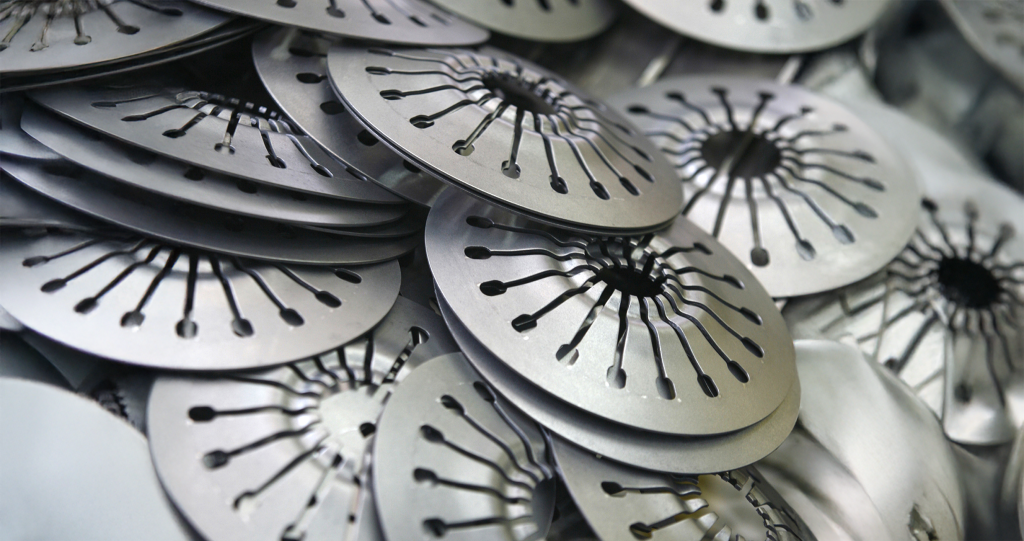
Different industries, including automotive systems, electronics, and medical devices, rely on custom metal stampings. These stamped parts are manufactured to tight tolerances to deliver specific performance characteristics under the most difficult working conditions. Few people appreciate how a successful stamped component is determined long before the actual manufacturing process begins.
The design basics for custom metal stampings hold the secret to perfection. A little knowledge can make all the difference between a part that works flawlessly and one that costs you money through rework and waste. Master the design phase, and you’re not just designing a pretty component-you’re designing a part that can be manufactured efficiently, consistently, and at low cost.
Smart design decisions are crucial in a manufacturing process concerning stamped parts. A good design minimizes waste, decreases extra processes, and maintains structural integrity during the manufacturing process. For the best outcome, think of design as your roadmap to success, since every decision of form, precision, and material selection will impact your entire manufacturing workflow and overall profitability.
Material Selection for Custom Metal Stampings
Choosing the right material for your custom metal stampings gets everything right in the first place. This decision has a direct influence on performance, durability, and manufacturing costs.
Stainless steel stands apart when strength is needed, along with resistance to corrosion. This is a widely used material in both medical instruments and car parts, as it resists harsh conditions quite well. In electronic and aerospace applications, aluminum is preferred by virtue of its high strength-to-weight ratio, which is essential in applications where weight is a sensitive factor. On the contrary, brass is preferred for its excellent electrical conductivity and pleasing aesthetic qualities, being used in electric contacts and decorative elements.
Another key factor in the success of your job is material thickness. Thicker materials give you greater strength and more durability but require heavier tooling and increased press forces, which means higher production costs.
Thinner materials lessen the demand on the tooling, although they may sacrifice structural integrity, again depending on your application.
Your material selection at the design stage has a ripple effect right through into production. The right choice will optimize tooling requirements, minimize waste, and make sure your parts perform reliably in their application. Get this decision right from the outset, and it will save you time, money, and possible headaches later on.
Principles of Design for Manufacturability
Tolerances and clearances are important in metal stamping for more than just accurate dimensions. They determine whether your parts will correctly fit together and function correctly. Greater stringency means higher precision. However, it carries a bigger price tag, too. Each successive level of precision requires progressively more precise tooling, longer manufacturing time, and more effort on inspection.
When you specify tolerances, you are making a serious business decision. A part that requires a tolerance of ±0.001″ will be significantly more expensive to manufacture than one that can accept a tolerance of ±0.010″. You will want to identify which dimensions are critical to the part functionality and can tolerate a looser specification. Thoughtful consideration of tolerances will provide you with parts that fulfill your expectations and keep your production costs minimal.
Incorporating Draft Angles and Radii
In metal stamping design, draft angles and radii are your insurance policy against production problems. Draft angles can range from 1° to 5° and allow your stamped parts to release cleanly from the die without causing surface damage or requiring excessive force for ejection. This seemingly minor detail dramatically reduces tooling wear and maintenance costs.
Radii work differently but are equally important. Sharp corners are a source of stress concentration and crack initiation during forming. Appropriate radii in your design distribute the stress more evenly around the material, preventing failures and prolonging life for both your parts and your tooling. Designing to Avoid Common Mistakes in Metal Stamping. Even the best-laid plans may have some design choices that can sabotage your custom metal stamping. Understanding these common design mistakes in metal stamping will help you avoid costly setbacks and production delays.
1. Replace Sharp Corners with Appropriate Radii
Sharp corners act as stress concentration points that may crack during the forming process and can accelerate tooling wear. Replacing sharp corners with appropriate radii allows for a better distribution of stress across the material.
2. Minimize Overly Complex Features
Features that are too complex and involve several operations of formation increase the risk of tooling damage, as well as the amount of scrap. Every additional feature complicates the design of the die, creating more possibilities of misalignment or material failure.
3. Respect Minimum Bend Radius
Tight bends in excess of the minimum bend radius for the material usually result in cracking or tearing. Each material has specific forming limits that must be adhered to in order to maintain part integrity.
4. Provide Full Specifications
The truth is that incomplete specs invite interpretation, and you get parts that are not necessarily suitable for the intended functions. Complete drawing and dimensional information on material and finish requirements assures everyone is working from the same blueprint.
By simplifying the design to eliminate features you don’t need and combining operations where possible, you can cut the risks of manufacturing yet retain functionality.
Optimizing Part Geometry for Stamping Efficiency
Optimizing the geometries of parts for stamping efficiency has a direct impact on your bottom line. Complex geometries accelerate tooling wear, driving up maintenance costs and extending lead times. Where your design includes intricate contours, multiple angles, or excessive detail, you’re essentially asking your tooling to work harder-and that means more frequent die replacements and production interruptions.
Strategic geometry simplification offers cost-effective metal stamping solutions while maintaining functionality. Consider these approaches:
- Eliminate unnecessary details that don’t contribute to the part’s performance
- Combine multiple features into a single operation where feasible
- Standardize dimensions across similar components to reduce tooling variety
- Minimize the number of bends and forming operations required
The advantages continue beyond the stamping floor. Optimized geometry makes your parts easier to handle during assembly, reducing the time your operators spend positioning and aligning components. This translates to lower labor costs and faster throughput in your production line. When you design with geometry optimization in mind, you’re building efficiency into every stage of your manufacturing process-from the first press stroke to final assembly.
Advanced Manufacturing Processes in Custom Metal Stampings
Progressive stamping addresses the need when a project requires complex designs or involves several manufacturing steps. This advanced method of metal stamping utilizes a number of carefully placed stations in one die, where the raw material moves through each station to accomplish sequential operations: cutting, bending, punching, and forming in one continuous motion.
Benefits of the Progressive Stamping Process
Progressive stamping process benefits include:
- High-volume efficiency: Produces thousands to millions of identical parts with exceptional consistency
- Reduced secondary operations: Multiple forming steps happen simultaneously, eliminating the need for separate processes
- Enhanced precision: Each station builds upon the previous one, maintaining tight tolerances throughout
- Lower per-piece costs: Ideal for large production runs where tooling investment is offset by volume
- Minimal material waste: Optimized strip layouts maximize material utilization
This methodology works wonders if you need complex features, complicated shapes, or detailed sizes for your tailor-made components. Progressive stamping offers a lot of repeatability between runs because the process is automated, finding favor in automotive, electronics, and medical device applications.
The Role of Prototyping in Design Validation for Custom Metal Stampings
Prototyping allows you to avoid making costly mistakes before volume production. With 3D printing and CNC machining, you will be able to create functional samples as close to your final design without having to invest heavily in production tooling. These physical prototypes provide the means for your team to actually touch, test, and assess the component in ways that are just not possible with a digital model. The real value of prototyping is form, fit, and function verification under operating conditions that exist in reality. You will know whether the mounting holes line up, if the part goes together as expected with other components, and how it withstands pressure. This real-world testing highlights design problems at an early stage, which may not be apparent until production has started.
Key benefits of prototyping include:
- Identifying dimensional inaccuracies before tooling fabrication
- Testing material behavior during forming operations
- Verifying assembly sequences and clearances
- Reducing scrap rates and tooling modifications
Addressing issues at the prototype phase is critical to minimize waste, avoiding expensive tooling changes, and drastically accelerating your timeline from concept to delivery.
Choose a Trustworthy Manufacturer for Guaranteed Quality in Custom Metal Stampings
The consistency in quality of your custom metal stampings depends essentially on the choice of the right manufacturing partner. You have to be able to work with experienced manufacturers who are certified to IATF 16949:2016 for automotive standards and ISO 9001:2015 for quality management systems. These various certifications represent a firm commitment to high-quality custom metal stampings.
Degele Manufacturing Inc. provides over 50 years of experience in managing client projects from start to finish with a comprehensive range of capabilities that include:
Ranging from 40 to 400 tons, stamping presses can meet a wide array of application needs.
Secondary operations that include welding, brazing, tumbling, wire EDM, and CNC milling and turning.
In-house tooling and machining, ensuring efficient workflows in production.
Their prototyping support includes CAD software compatible with SolidWorks formats for design-for-manufacturability consultations in front of full-scale production. This nurtures collaboration that finds problems early in the process to make sure transitions from concept to finished components go smoothly.
Choose Degele Manufacturing
Success in custom metal stampings begins with good design principles, from material selection and tolerances to part geometry and prototyping. Teaming up with an experienced manufacturer like us who understands those principles turns your relationship from just a supplier into a collaborative partner dedicated to the success of your project. We have certified quality systems with broad manufacturing capabilities from concept to full production for over 50 years.
Whether you are designing a new component or refining an existing design, our technical staff and production resources are prepared to take ideas and develop them into real products. Ready to discuss your next custom metal stamping project? Contact us at Degele Manufacturing today at (586) 949-3550 for trusted support from initial design consultation through final production delivery.