
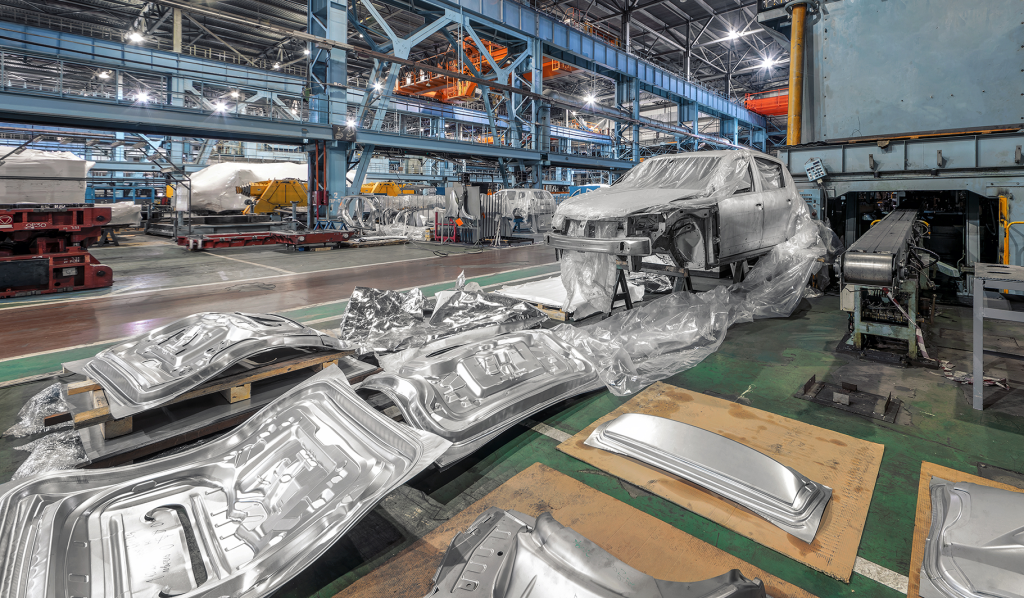
We at Degele Manufacturing demonstrate an understanding that deep drawing and stamping selection create substantial effects on metal forming work efficiency and product quality. These two methods function as vital parts of our manufacturing operations, while each method maintains specific operational functions and distinctive operational traits. Continue reading to examine all aspects of the process to provide you with reliable information which will support your decision-making.
What is Deep Drawing?
Deep drawing enables the creation of complex manufacturing components through the transformation of flat sheet metal into deep hollow shapes. The method requires a metal sheet to be pushed into a die through a punch mechanism which will gradually form the sheet into its final shape. It enables manufacturers to create parts which have deeper dimensions than their widest section through its ability to produce cylindrical and cup-shaped and intricate automotive parts. Deep drawing produces fuel tanks and kitchen sinks through its ability to create parts that maintain their strength and accuracy throughout the production process.
The process needs several steps to maintain material integrity by stopping any material from developing tears or wrinkles. It uses lubricants to create friction reduction which enables efficient shaping of materials. The deep drawing process requires aluminum and stainless steel and copper as its metals because these materials provide the necessary malleability and strength for the process. The materials produce lightweight products that maintain strength while requiring minimal material resources during large-scale manufacturing. Our deep drawing process demonstrates its advantages for automotive and aerospace industries because these sectors require operations which demand both exact specifications and long-lasting results.
What is The Stamping Process?
The stamping process serves as an adaptable metalworking method that transforms sheet metal into specific shapes through its die and press assembly. Stamping uses high-speed methods to produce flat or slightly shaped components which make it suitable for high-volume manufacturing needs. It includes multiple techniques that manufacturers use to create their products through blanking, embossing, and coining. Blanking involves cutting out a specific shape from a sheet of metal. The process of embossing develops raised or depressed patterns on surfaces, while coining creates exact patterns through metal compression. The automotive and electronics and appliances industries use these manufacturing techniques because they require fast production and accurate results.
Manufacturers select steel and aluminum and brass as their preferred stamping materials because these metals maintain their structural strength during multiple high-pressure stamping operations. Companies select stamping as their production method because it delivers both operational efficiency and budget-friendly results when they need to create brackets, panels, and connectors. The stamping process produces identical components at high speed which enables manufacturers to maintain product quality during their large production runs.
Deep Drawing and Stamping: A Comparison
To compare deep drawing with stamping, you must examine the required shape complexity of your project. Deep drawing enables the production of deep hollow products which lack visible joints through its capacity to create seamless cylindrical and cup-shaped objects. Stamping enable users to create flat parts which have slight three-dimensional shapes and detailed patterns. The automotive industry requires specialized components that deep drawing can produce more effectively.
Stamping also enables users to create flat products which have minimal three-dimensional shapes and stamping creates the best results for those products. Deep drawing needs materials which show high malleability so that drawing operations do not result in material tearing, whereas stamping uses high-pressure methods to process various materials which include tough metals.
Production speed functions as another vital element that needs evaluation. Deep drawing requires more time because it needs several steps, which guarantee accurate results while avoiding production faults. The process needs attention because any mistake will result in material tearing or material wrinkling. Stamping offers faster operation speed, which makes it ideal for businesses that need to produce goods in large quantities. It enables businesses to create many identical parts rapidly through its efficient production method. The two methods require different tool costs through the different processes which they use. Deep drawing requires higher initial expenses because of its complex die and equipment requirements, whereas stamping offers lower tooling expenses for basic design work.
The Processes We Use for Success
Before starting physical production, we sometimes need to make a virtual prototype or actual prototype which allows us to test the whole deep drawing process. The process enables early detection and resolution of design problems which leads to time and budget savings. Automotive component designers create new designs through component design which they use to develop new automotive parts. For example, if you’re designing a new component for an automotive application, creating a prototype can help you catch any flaws in the design before moving to full-scale production. This approach not only saves time but also ensures that the final product meets your exact specifications.
Selecting the right materials establishes essential requirements for achieving successful outcomes in deep drawing and stamping operations. The two techniques require different attributes which lead to successful production outcomes. Deep drawing requires materials that are ductile, malleable, and capable of withstanding deformation without cracking. The industry employs common materials, which include aluminum, stainless steel, and copper. The materials possess lightweight characteristics together with corrosion resistance and exceptional conductivity, which make them suitable for different usage scenarios.
The strength of aluminum together with its lightweight characteristics makes it a common material choice in automotive and aerospace component manufacturing. Kitchen sinks and medical equipment that use stainless steel material benefit from its long-lasting durability and ability to prevent corrosion. Copper functions as a primary material for electrical applications because it delivers exceptional conductivity.
The stamping process enables metalworking with various metals, which include materials that have increased hardness, because the process focuses on both cutting and shaping operations. The commonly used materials in this industry include steel, brass, and titanium. Steel serves as the preferred material because it provides both strength and adaptable functions to various automotive and construction uses. The decorative and functional parts of brass products combine both visual attractiveness and machining ease.
Aerospace and medical fields widely use titanium because it combines lightweight features with exceptional durability. Steel serves as an ideal material choice for construction projects because of its ability to provide strong and durable structural support. Brass serves as the decorative material solution that delivers the visual attractiveness you want.
The thickness and strength of your materials should become the basis for choosing between deep drawing and stamping. The deep drawing process requires thinner sheets, while stamping enables processing of thicker materials. Your decision should stem from the part’s intended final use. Deep drawing serves as the ideal method for parts needing seamless construction, while stamping functions better for both flat and complex geometric patterns.
Producing an automotive fuel tank, for example, requires deep drawing as the superior method because it enables the creation of durable components through seamless manufacturing. Stamping works better for producing flat panels required in electronic devices.
Different manufacturing requirements force manufacturers to choose between the distinct benefits and difficulties that deep drawing and stamping provide. The comprehension of these aspects enables companies to select the most suitable method for their particular projects. Deep drawing creates strong one-piece parts that do not need joints or welds, which makes them suitable for high-pressure and fluid-tight applications. The process uses less material than other methods which makes it an efficient method for creating complex shapes.
Deep drawing produces surfaces that are both smooth and consistent which makes them suitable for visible applications in cookware and appliance manufacturing. The multistage operations of deep drawing make production slower while increasing tooling expenses. This process is limited to ductile metals, which may restrict material options.
The stamping process provides optimal results for manufacturers who need to produce large quantities of identical parts. The process enables companies to use multiple types of materials which include hard metals while producing cost-effective solutions for basic components. Stamping allows high-speed manufacturing, which operates efficiently for production runs that require uniformity and production capacity to support extensive manufacturing operations. It’s process fails to produce effective results in creating deep or hollow components while generating higher waste materials than the deep drawing method. Stamping needs extra procedures when it comes to achieving high accuracy or specific design needs.
How This Applies to Automotive Parts
The automotive industry uses deep drawing to manufacture fuel tanks and mufflers and structural components. The parts need seamless construction with high precision, which makes deep drawing the perfect method. The aerospace industry uses deep drawing to manufacture lightweight hollow components, which include engine casings and satellite parts. The parts need high durability with exact precision, which makes deep drawing the best choice.
The deep drawing process enables manufacturers to produce kitchen sinks and cookware that feature smooth and uniform surfaces. Deep drawing enables medical professionals to create containers and surgical instruments which provide both strength and exactness through seamless production methods.
Stamping serves as the primary method for producing flat or moderately contoured components because it achieves high throughput rates in mass production. The electronics sector employs stamping to manufacture various components, which include connectors, brackets, and enclosures. The parts needed consistent quality together with high production rates, so stamping became the most effective option.
The automotive sector employs stamping techniques to manufacture various components, which include panels, brackets, and small, intricate parts. The stamping process enables appliances to produce control panels, decorative trims, and housings. The construction sector uses stamping for metal fastener production, together with structural component development, to achieve strong and durable results.
Choose Degele Manufacturing
Choosing if deep drawing or stamping is best for you can mean a lot of things, including what’s best for part design, production volume, material suitability, and budget requirements. Deep drawing functions best when it needs to produce seamless hollow components, which require precise design work at medium production levels.
Stamping performs best for manufacturing high quantities of flat or moderately contoured components because it provides cost savings and material handling flexibility. Stamping typically decreases tooling expenses while deep drawing technology reduces material waste for detailed shapes, which makes it the optimal solution for certain use cases.
We at Degele Manufacturing possess specialized knowledge and the necessary machines to execute deep drawing and stamping operations, which will guarantee that your project achieves optimal quality results! You can contact us today at (586) 949-3550 for any questions or support you may need. We will assist you in transforming your metal forming concept into reality!