
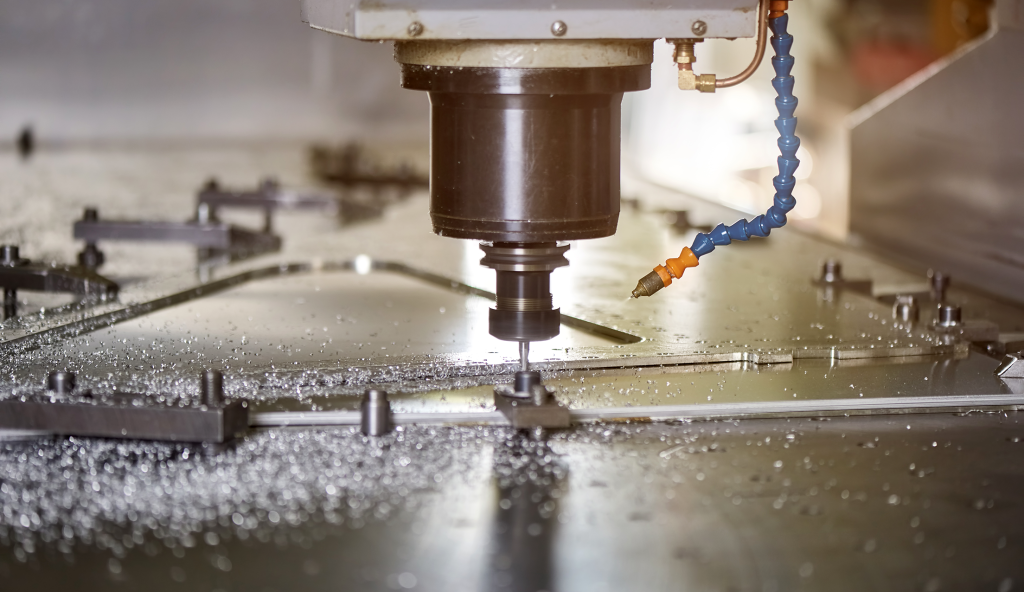
The manufacturing industry, which is always changing and moving quickly, depends greatly on precision. One such development that has played a big part in the landscaped of these goals is CNC (Computer Numerical Control) turning and milling. Among the most significant technologies, these methods, which control maximum precision and speed at the same time, have completely revolutionized the whole production process of intricate metal components. Continue reading to delve into the details of CNC turning and milling, their benefits, and observe how they are slowly changing the manufacturing industry.
CNC Turning and Milling – An Overview
CNC turning and milling are high-level machining processes where the computer dictates the cutting tools to create the required parts out of the raw material. These processes are utilized in various industries such as aerospace, automotive, medical, and consumer electronics. The raw materials for CNC turning and milling are primarily aluminum, brass, copper, iron, and stainless steel. All these substances have different characteristics that call for specific methods and techniques to be used in their manufacture for the desired results.
CNC turning is the process in which a workpiece is spun on a lathe while a cutting tool forms it. This method is very suitable for highly precise cylindrical parts. CNC milling, however, lets the use of rotating cutters to remove the material from a workpiece, allowing for the production of complex shapes and geometries. The two methods can be used together to yield very delicate parts that are of the correct standards.
CNC Turning and Milling Advantages
One of the best things that stand out about CNC turning and milling is that it enables the manufacture of complicated products in a single operation. This subsequently leads to the reduction of the number of processes and gives a considerable saving in time and guarantees the accuracy of machining in the entire production process. Additionally, CNC machines can operate continuously, reducing the need for human intervention and minimizing the risk of errors.
One more major benefit is the uniformity and reproducibility of CNC machining. Once a program is set up, the machine can reproduce the same parts with astounding precision, thereby allowing the same quality to be maintained for the whole production run. This is very important in industries where consistency is of the greatest concern, such as aerospace and medical device manufacturing, among others.
CNC turning and milling likewise present a significant degree of flexibility. The machines can be set up to make everything from basic cylinders to intricate shapes, depending on the customer’s request. Because of this feature, they are the best choice for not only prototyping and small-batch production but also for large-scale manufacturing.
Applications of CNC Turning and Milling
CNC turning and milling have found applications in a number of industries and continue to be used to produce parts with high precision as well as complex shapes. As an example, in the aerospace industry, these methods are applied to fabricate components of jet engines, landing gear, and other critical systems. The automotive industry is very much dependent on CNC machining for the manufacture of engine parts, transmission components, and other similar parts to a high degree of accuracy.
In the sphere of medicine, CNC machines are utilized in the making of surgical instruments, implants, and other medical devices. The electronics industry is one of the major beneficiaries of CNC turning and milling technology. These methods are extensively applied in the manufacture of parts for consumer electronics, telecommunication equipment, and industrial machines. This industry strongly necessitates the creation of complex parts accurately since even the smallest deviation might cause a performance drop.
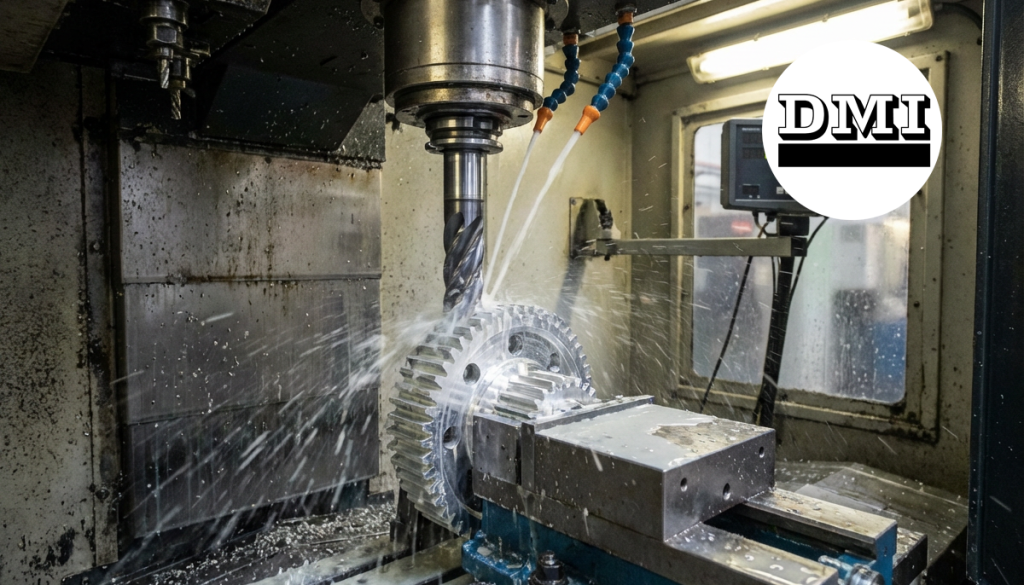
The Role of CNC Turning and Milling in Modern Manufacturing
The manufacturing industry of today has the biggest requirements for precision and efficiency ever. The most significant factors that resulted in such high-performance demands were the adoption of CNC turning and milling. They provided the industry with incredible accuracy and fast operation. Besides, these techniques enable the maker to create intricate components with uniformity and repeatability, and every part will comply with the most stringent quality requirements.
CNC machines can work non-stop, which means less control from operators and also fewer occasions when mistakes can happen. This is time-efficient, yet it also guarantees that accuracy in the machining operation is preserved throughout the entire production cycle. The capability of CNC turning and milling to easily adapt to different manufacturing requirements makes them suitable for a variety of manufacturing processes, including prototyping and production in large quantities.
CNC Technology Progressions
The domain of CNC turning and milling is never stagnant, as the development of new breakthroughs and innovations keeps taking place. One of the most remarkable advancements that occurred recently is the use of artificial intelligence (AI) and machine learning (ML) in CNC machines. The modern approaches of the abovementioned technologies endow machines with the capability of acquiring knowledge from the data and subsequently enhancing their performance, over time, leading to even more accuracy and efficacy.
The other significant enhancement is the combination of additive manufacturing (3D printing) with CNC machining. This blending of the two processes is considered the strongest point of both technologies as it enables the realization of complex parts with high precision and fast production. Additive manufacturing can generate components presenting tricky geometries that would be impossible or highly impractical to fabricate using conventional machining methods. After the component has been printed, CNC machining can be applied to it for further refinement and finishing, making sure that it conforms to the exacting standards.
The Future of CNC Turning and Milling
CNC turning and milling are getting more and more important with the growing demand for precision and efficiency. The deployment of these technologies assures an unparalleled precision and a high speed that are the only reason for the production of parts with such characteristics as complexity, consistency, and repeatability.
CNC will only get smarter in the future with AI, machine learning, and even 3D printing, pushing the process further up the innovation ladder. Consequently, the manufacturers will be able to create even more detailed components with a nice blend of accuracy and speed, meeting the trendiest sectors’ demand like the aerospace, automotive, medical, and electronics one.
Choose Degele Manufacturing For Quality Results
The quality standards across various industries have been transformed by CNC turning and milling while at the same time ensuring an uninterrupted production process. The CNC turning and milling will play an ever-greater role in the manufacturing scenario due to the constantly rising demand for quality and efficiency. The manufacturers are able to push the entire batch to the standard of premium quality thanks to such tight tolerances and ongoing production monitoring.
It is quite clear that if you aim to fortify your supply chain, lower your costs, and/or improve the quality of your products, the solution is CNC turning and milling! If you are interested in experiencing the spectacular effects that modern CNC turning and milling can bring to your production projects, please do not hesitate to contact us at (586) 949-3550. Our team is eager to work with you and provide the high-quality products that you expect.