
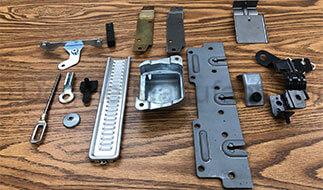
The automotive industry continues to evolve at a rapid pace, driven by demands for greater fuel efficiency, enhanced safety standards, and increasingly complex vehicle designs. At the heart of modern automotive manufacturing lies precision metal stamping, a critical process that shapes the structural components, chassis elements, and intricate parts that make up today’s vehicles. As Original Equipment Manufacturers (OEMs) push the boundaries of performance and sustainability, automotive stamping suppliers must adapt to meet stringent requirements while maintaining competitive pricing and reliable delivery schedules.
Understanding Modern OEM Demands
Lightweighting: The Efficiency Imperative
Automotive OEMs face intense pressure to reduce vehicle weight without compromising structural integrity or safety. Every pound eliminated translates to improved fuel economy, extended electric vehicle range, and reduced emissions. This lightweighting mandate has fundamentally transformed material selection and stamping processes.
High-Strength Low-Alloy (HSLA) steels have become the workhorses of automotive stamping, offering exceptional strength-to-weight ratios that allow for thinner gauge materials while maintaining crash performance standards. Advanced High-Strength Steels (AHSS) and Ultra-High-Strength Steels (UHSS) now routinely appear in body-in-white assemblies, door beams, and chassis reinforcements.
Aluminum has transitioned from a premium material to a mainstream choice for hoods, deck lids, doors, and increasingly, structural components. Its density, approximately one-third that of steel, delivers dramatic weight savings, though it presents unique stamping challenges including springback characteristics and work-hardening tendencies that require specialized tooling and process expertise.
Precision Tolerances: No Room for Error
Modern vehicles incorporate sophisticated electronics, precise assembly sequences, and complex multi-material joints. This integration demands unprecedented dimensional accuracy from stamped components. Tolerances that once measured in millimeters now frequently specify tenths of millimeters or tighter.
Critical dimensions affecting fit, function, and assembly efficiency must remain within specification across production runs spanning millions of parts. This consistency requirement drives investment in advanced die design, precision press controls, and comprehensive quality management systems including Statistical Process Control (SPC) and Coordinate Measuring Machine (CMM) verification.
Material Innovation and Coating Technologies
Beyond HSLA steel and aluminum, automotive stampers increasingly work with specialized materials including:
- Dual-phase and transformation-induced plasticity (TRIP) steels that combine formability during stamping with high strength in finished components
- Press-hardened steels (hot stamping/press quenching) for ultra-high-strength applications like A- and B-pillars
- Pre-coated materials with galvanized, galvannealed, or organic coatings that provide corrosion resistance while complicating the stamping process
Each material presents distinct challenges in die design, lubrication, press selection, and process parameter optimization. Successful automotive stamping suppliers maintain deep metallurgical knowledge and continuously refine their processes to accommodate evolving material specifications.
Just-in-Time Supply: Synchronization and Reliability
The automotive industry pioneered just-in-time (JIT) manufacturing principles, and these expectations have only intensified. Assembly plants operate with minimal buffer inventory, requiring stamping suppliers to deliver precise quantities at exact times—often with delivery windows measured in hours, not days.
This synchronization demands:
- Production flexibility to accommodate schedule changes and volume fluctuations
- Logistics excellence including dedicated transportation, sequenced delivery, and real-time shipment tracking
- Inventory management that balances OEM requirements with operational efficiency
- Contingency planning for equipment failures, material shortages, or transportation disruptions
A U.S.-based stamping supplier offers distinct advantages for domestic automotive manufacturers. Proximity reduces transportation time and costs, simplifies communication across time zones, and mitigates supply chain risks that have become increasingly apparent in recent years. For North American assembly operations, domestic sourcing provides greater supply chain resilience and responsiveness.
Traceability and Quality Documentation
Automotive quality standards represent some of the most demanding requirements in manufacturing. Stamped components must include comprehensive traceability throughout their lifecycle, from raw material certification through production, assembly, and potential warranty or recall scenarios.
Modern automotive stamping operations implement:
- Lot traceability systems that link finished parts to specific material heats, production dates, and process parameters
- PPAP (Production Part Approval Process) compliance including dimensional reports, material certifications, and capability studies
- IATF 16949 certification demonstrating adherence to automotive quality management standards
- Advanced Product Quality Planning (APQP) methodologies that identify and mitigate potential issues before production launch
These systems generate extensive documentation that OEMs rely upon for quality assurance, continuous improvement initiatives, and rapid response to field issues.
Durability Requirements: Built for the Long Haul
Automotive components must withstand extreme conditions over vehicle lifetimes potentially exceeding 200,000 miles and 15+ years. Stamped parts face cyclic loads, vibration, temperature extremes, corrosive environments, and impact scenarios during both normal operation and crash events.
Meeting durability requirements involves:
- Fatigue analysis during design validation to ensure adequate service life
- Corrosion protection through material selection, coating specifications, and design features that minimize moisture accumulation
- Structural validation including physical testing and finite element analysis (FEA) to verify performance under load
- Process controls that ensure consistent material properties and minimize defects that could become failure initiation sites
Case Examples: Stamping Excellence in Action
Case Study 1: HSLA Steel Structural Bracket
A major automotive OEM required a complex bracket assembly for electric vehicle battery mounting. The component needed to provide high strength while minimizing weight and cost. Working with HSLA steel, the stamping process incorporated:
- Progressive die design producing the part in six stations with integrated pierce, form, and flange operations
- Tight tolerance control (±0.15mm) on critical mounting features to ensure proper battery pack alignment
- In-process quality monitoring with automated vision inspection detecting edge cracks or splits
- Galvannealed coating providing corrosion resistance without requiring additional surface treatment
The resulting component achieved a 22% weight reduction compared to the previous mild steel design while meeting all structural performance requirements. JIT delivery to the assembly plant occurred three times daily with zero missed shipments over the program’s first year.
Case Study 2: Aluminum Hood Inner Panel
Transitioning a hood inner panel from steel to aluminum presented significant stamping challenges due to the material’s springback characteristics and lower ductility. The solution involved:
- Specialized die design with overbend compensation calculated through extensive forming simulation
- Aluminum-specific lubricants minimizing galling while allowing controlled metal flow
- Multi-stage forming process separating draw operations from final calibration
- Comprehensive dimensional validation using blue-light scanning technology
The aluminum hood inner contributed to a 40-pound weight reduction for the complete vehicle, directly supporting the OEM’s fuel economy targets. The stamping supplier’s proximity to the assembly plant enabled rapid iteration during development and consistent quality during production.
Case Study 3: Press-Hardened B-Pillar Reinforcement
Safety regulations demand exceptional strength in B-pillar reinforcements, which protect occupants during side-impact collisions. Press hardening (hot stamping) delivers tensile strengths exceeding 1,500 MPa, but requires specialized equipment and process control:
- Blank heating to austenitizing temperature (approximately 900°C)
- Rapid transfer to press dies equipped with integrated cooling channels
- Simultaneous forming and quenching producing martensitic microstructure
- Al-Si coating protecting against oxidation during heating
The resulting component provides crash performance unattainable with conventional cold stamping while maintaining reasonable cost through efficient production rates. Complete traceability documentation links each part to its heat-treatment cycle parameters, ensuring quality assurance throughout the supply chain.
The U.S. Manufacturing Advantage
For automotive OEMs and Tier 1 suppliers operating in North America, partnering with a U.S.-based stamping supplier provides strategic advantages:
Supply Chain Resilience: Domestic production reduces exposure to international shipping disruptions, trade policy changes, and extended lead times that can threaten just-in-time manufacturing schedules.
Communication and Collaboration: Proximity facilitates face-to-face engineering reviews, rapid prototype iteration, and immediate response to quality concerns or design modifications. Time zone alignment streamlines communication and accelerates problem-solving.
Total Cost Optimization: While piece-price comparisons may favor offshore suppliers, total cost of ownership including freight, inventory carrying costs, quality issues, and supply chain risk often favors domestic sourcing—particularly for high-volume programs with tight delivery requirements.
Dual-Region Sourcing Strategy: International automotive manufacturers increasingly seek North American production capability to support both domestic content requirements and supply chain diversification strategies. A U.S. stamping supplier can serve as a Western Hemisphere source complementing Asian or European production, providing geographical redundancy and market access.
Regulatory Compliance: U.S.-based manufacturing simplifies compliance with domestic content requirements, trade agreement provisions, and regulatory standards specific to North American markets.
Emerging Trends Shaping Automotive Stamping
Electrification Impact
The rapid growth of electric vehicles introduces new stamping requirements including battery enclosures, motor housings, and structural components adapted to EV-specific architectures. These applications often demand specialized materials, tight tolerances for thermal management interfaces, and novel designs that differ substantially from internal combustion engine vehicles.
Additive Manufacturing Integration
While metal stamping remains optimal for high-volume production, additive manufacturing increasingly complements stamping for low-volume applications, prototype tooling, and complex features that challenge conventional forming processes. Hybrid approaches combining stamped base components with additively manufactured features represent an emerging trend.
Digitalization and Industry 4.0
Smart manufacturing technologies transform automotive stamping through real-time process monitoring, predictive maintenance, and data analytics that optimize quality and efficiency. Connected sensors, machine learning algorithms, and digital twin simulations enable continuous improvement and proactive issue resolution.
Sustainability Initiatives
Automotive OEMs increasingly evaluate suppliers based on environmental performance including energy consumption, material utilization, and carbon footprint. Efficient stamping processes, scrap reduction strategies, and renewable energy adoption become competitive differentiators alongside traditional quality and cost metrics.
Selecting the Right Automotive Stamping Partner
The complexity of modern automotive stamping demands suppliers with comprehensive capabilities:
- Advanced engineering support including forming simulation, die design optimization, and Design for Manufacturability (DFM) collaboration
- Material expertise spanning conventional steels through advanced alloys and aluminum
- Quality systems meeting IATF 16949 and customer-specific requirements
- Production flexibility accommodating volume fluctuations and program changes
- Supply chain management delivering JIT performance with comprehensive traceability
- Continuous improvement culture driving cost reduction and quality enhancement throughout program lifecycles
For U.S. automotive manufacturers and international OEMs seeking North American production capability, a domestic stamping supplier combines technical expertise with strategic advantages in supply chain resilience, communication, and total cost performance.
Conclusion
Metal stamping remains fundamental to automotive manufacturing, but the requirements continue to evolve. Success in this demanding industry requires more than production equipment, it demands metallurgical expertise, quality discipline, engineering collaboration, and supply chain excellence. As lightweighting initiatives intensify, materials advance, and quality expectations rise, the automotive stamping supplier becomes a strategic partner rather than simply a component source.
Whether supporting domestic automotive production or serving as a North American node in a global supply network, U.S.-based stamping capability offers compelling advantages for manufacturers navigating an increasingly complex and dynamic industry landscape.
At Degel Manufacturing, we bring decades of precision metal stamping expertise to the automotive industry. Our U.S.-based operations, advanced capabilities, and commitment to quality make us the partner of choice for OEMs and Tier 1 suppliers demanding excellence. Contact us to discuss your automotive stamping requirements and discover how our expertise can drive your success.