
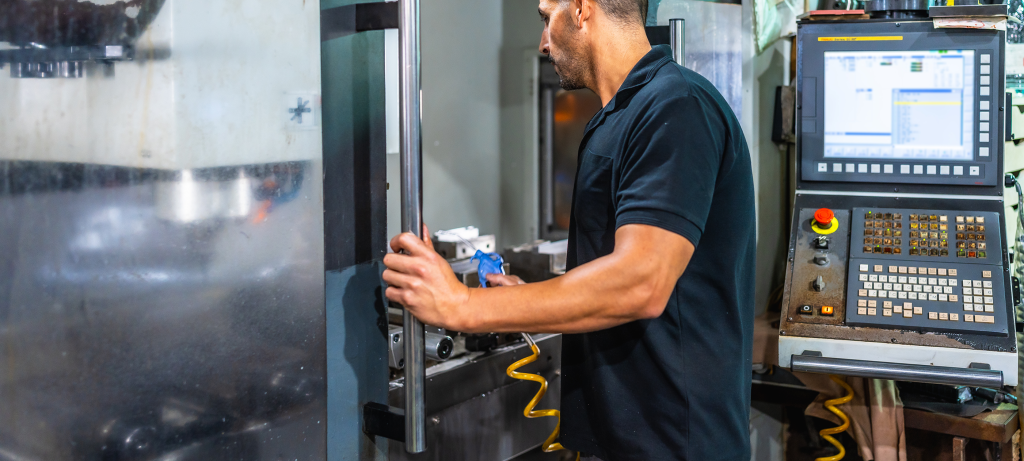
The picture you seem to have in your mind when it comes to top-notch manufacturing technology is probably that of highly advanced factories and large budgets. But the truth is, CNC machining has been so perfect and cheap that it is now available to small businesses like yours, changing the way custom parts are made for many industries- from aerospace to automotive and so on.
CNC (Computer Numerical Control) machining is the technology that is used to make the product, and it is considered a revolutionary change in the manufacturing process. Manually operated equipment with teams of skilled workers was needed for the process, while now, computers do the controlling and precision instead. This method is not only about getting along with the bigger competitors, but rather, it is about gaining the pluses that were never before possible.
This transformation has been made possible by two major factors: unparalleled accuracy and smart automation. A CNC machine can get very precise with up to ±0.025 mm, about one-fourth of the thickness of a human hair, and it can do so while needing very little human input in the whole process. That being said, the mentioned combination of technological advantages fits piloting the small companies that are producing the custom parts, offering them professional quality without the overhead costs that conventionally come with precision manufacturing.
Understanding CNC Machining
CNC machining stands for Computer Numerical Control machining- a digital manufacturing technology that transforms your design ideas into physical parts with remarkable accuracy.
The magic happens through a straightforward three-step process:
Step 1: Design Creation
The first stage of the process is a CAD file, which is a digital model. This digital representation not only includes the features of your desired part but also the dimensions and specifications. Most modern CNC operations utilize formats such as SolidWorks, which makes the design phase very flexible and accessible.
Step 2: Programming
A machinist turns your CAD file into G-code, the language of CNC machines. This program provides the instructions that the machine follows: where to move, how fast to cut, when to switch tools, and how to cool both the part and the tool during the operation.
Step 3: Automated Manufacturing
The CNC machine executes the G-code with very little human supervision. Mills, lathes, grinders, and routers work on multiple axes (typically 3 or 5) in order to create your part.
CNC is different from other processes in that it is a subtractive manufacturing process. Instead of building the part layer by layer as in 3D printing or forming material as in injection molding, CNC machining begins with a solid block, also known as a blank or workpiece, and gradually removes material through accurate cutting operations until the finished part shows up.
Benefits of CNC Machining for Small Businesses
Every manufacturing decision has a direct influence on your profits when you manage a small business. One of the main advantages of CNC machining is the direct solution of the challenges you encounter every day.
A Precision That Differentiates You from Others
CNC machining can achieve the highest levels of accuracy, with tolerances as low as ±0.025 mm, which is around 1/4 the size of a human hair. Such high precision practically eliminates any possibility of defects in the production of custom parts that meet the standards exactly, which is a common occurrence with manual machining. You will always supply your customers with the right-sized component which, in turn, will not only help you win their trust but also save you the costs related to returns, restocking, or reworking.
Automation Leads to Labor Cost Reduction
The operation of CNC machines is so computerized that there is very little human supervision needed during production. After the machinist has input the G-code and positioned the machine, it will take care of the entire process: changing tools, cutting, and cooling- all automatically. This automation not only allows your team to pay more attention to tasks that are of higher value but also keeps your labor costs steady and under control.
A Variety of Tooling Options
As your company expands, so do your manufacturing requirements. Now, CNC machining can easily switch between different tooling requirements, whether for basic drilling or intricate multi-axis milling. The same CNC machine can take care of both the making of prototype tool and die components and the production of fixtures. There is no need to buy separate machines for each type of project; you can do everything from machining aluminum brackets to making precision plastic housings with one machine.
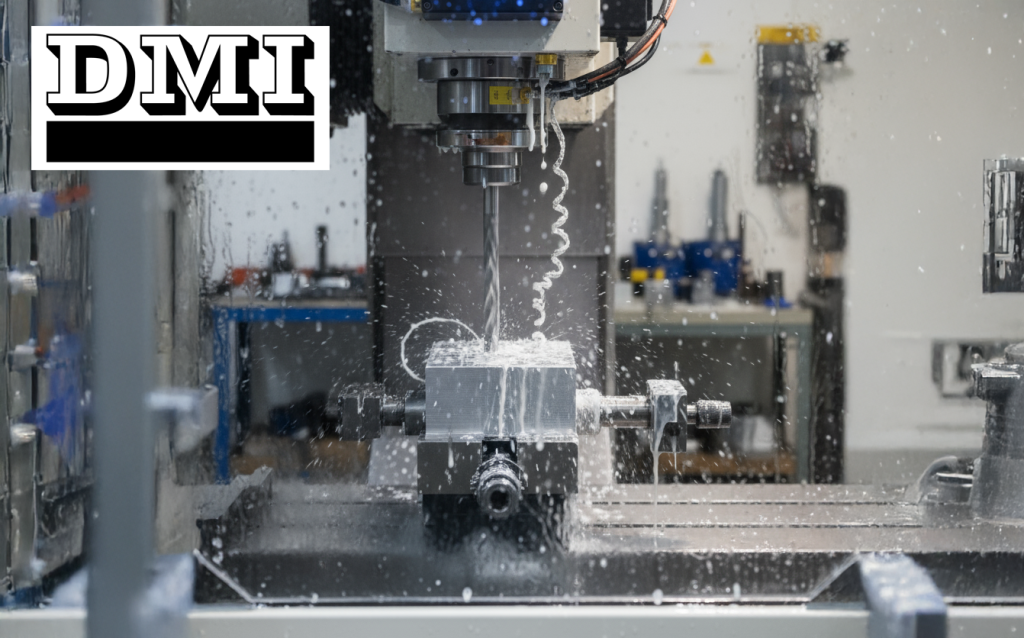
Cost-Effectiveness and Production Flexibility with CNC Machining
Your financial limitations need not restrain your aspirations in manufacturing. CNC machining is a remarkably competitive choice in the case of unique custom projects or medium-volume production runs. Old-fashioned techniques demand expensive tool setups for every new part, but in the case of CNC machines, it takes almost negligible time to change from one project to another, which is a tremendous advantage for small companies that have to cope with changing market needs.
Prototyping Is Now A Game Changer
Having the option of using CNC you can go straight from your CAD drawings to working prototypes without the long waiting times for the setup of the traditional manufacturing process. Need to test three different design iterations? No problem. The quick turnaround allows you to refine your products rapidly, catching design flaws early before committing to larger production runs.
The most significant dint of manufacturing efficiency is when there is a mix of CNC machining and metal stamping processes. Many small enterprises find that by combining these two technologies, they are able to create a smooth workflow that fully utilizes their production capacities. CNC machines can produce the tooling and dies with the precision required for the stamping-metal operations, and at the same time cope with the secondary operations regarding machining of stamped parts. This just-in-time manufacturing technique eliminates the need to schedule with multiple suppliers, which in turn leads to shorter delivery times and keeps the tool and die work in-house.
The flexibility extends to your production planning, too. You can start with small batches to test market demand, then scale up production as orders increase- all without significant additional investment in new equipment or tooling.
Materials Compatibility and Application Scope in CNC Machining
The largest among the many pros that come with CNC machining is its capability to handle a plethora of materials. This also means that your small company can utilize just about any hard material in its operations, which indicates that your choice of material will depend on your company’s needs and wants. Among the most popular materials in the manufacturing sector, there are:
Aluminium: Due to its amazing properties and high resistance to weight, aluminum is widely used in the automobile and aerospace industries.
Brass: Brass, with its characteristic of being resistant to corrosion, finds its way in places like electrical connectors and valve components.
ABS: The durable quality of this plastic material makes it suitable for making impact-resistant housing and enclosures.
Delrin: Delrin gets its recognition for being used in the application of gears and bearings, i.e., areas with very smooth movements due to its low-friction property.
Nylon: Nylon is known for its high strength and long-lasting properties, it is selected for parts that are heavily used or subjected to friction.
Applications in Various Industries
The versatility of machining materials opens up the opportunity for various industries. Here are a few examples:
Automotive Industry: Use of aluminum components has become very common in engine brackets or transmission housings, where both the strength factor and weight reduction are necessary.
Electrical Industry: Brass is the metal of choice for electrical connectors and valve components due to its important role in conductivity.
Tooling Industry: Delrin’s stability in dimensions ranks it among the best materials for jigs and fixtures that demand precision measurements over an extended time.
Benefits for Small Businesses
The plastics category deserves special attention for small businesses. Here are two key advantages:
Cost-effective Machining: In contrast to injection molding, CNC machining does not require heavy tooling costs, and complex shapes can be produced economically.
Design Flexibility: CNC technology allows you to create one-of-a-kind metal or plastic hardware with unique features that professionally isolate your products from mass-produced counterparts.
Specific Applications
Below are some areas where the results from CNC machining were great: Medical Industry: The manufacturers of the devices get their components for the surgery instruments and prototypes of the implant through CNC machining.
Aerospace Industry: The custom-made brackets and various fittings are made through CNC machining by suppliers.
Furniture Industry: The pieces made by the producers are reinforced by the CNC capabilities when creating the unique metallic or plastic furnishings.
A wide variety of materials compatible with CNC machining make it an indispensable tool in different sectors; it also gives manufacturers, particularly small ones, the power to breathe life into their ideas without compromising quality.
CNC Machining For Small Businesses
Degele Manufacturing Inc. is a significant example of how CNC machining can be integrated into a holistic manufacturing operation and bring about competitive advantages for companies of all sizes. Since 1970, this manufacturer based in Michigan has earned its anointing through a process-oriented approach that renders the parts and assemblies of the best quality to the customers by maximizing efficiency and minimizing costs.
This facility of the company is the manifestation of the blending of the old and the new manufacturing techniques, so to speak. Their stamping presses vary in size from 40 to 400 tons, working on projects taking as few as 2,500 parts annually, to those producing millions of components; they do the same in a large-scale operation. Such an operational scale gives a great advantage; the customer does not really have to look for different vendors for his stamping and assembly- the one can take care of the whole production run.
What sets Degele apart is its integration of secondary operations that complement its primary CNC processes:
- CNC Milling and Turning for precise finishing work
- Welding and Brazing for joining components
- Wire EDM for intricate cutting applications
- Tumbling for surface finishing
- Outsourced services, including waterjet cutting, laser processing, heat treatment, and finishing
A unified flow of activity is created by the tooling, machining, manufacturing, inspection, assembly, and maintenance areas. The parts are moved rapidly and smoothly through each of the production stages thanks to this division of labor. The technical teams are able to maintain quality control during the entire process while working in their specific areas of expertise. The company’s CAD features serve the most popular formats, including Solidworks, which facilitates the fast movement of prototypes from design to production, especially in short-run production and development of prototypes.
Utilizing CNC Machining Nowadays: Small Business Practical Tips.
The first step is to adopt design for manufacturability principles right from the start. CNC processes in your CAD models will not only bring down production costs but also significantly enhance part quality. Some of the measures that are very effective in reducing costs include: not tolerating very tight tolerances unnecessarily, tool changes that are kept to a minimum, and features designed for easy access by standard cutting tools.
Short-run production is a turning point for startups and players in the niche market. It is CNC machining that allows you to produce economically from one prototype to hundreds or even thousands. This is in stark contrast to conventional manufacturing methods that require large minimum order quantities. You can try out the market for your product, improve its design according to customer feedback, and increase production slowly without large investments in stocks. This flexibility is crucial when it comes to determining the product-market fit or catering to a small customer group.
Your manufacturing capabilities extend beyond what sits in your own shop. Strategic outsourcing options complement your CNC operations beautifully. Need waterjet cutting for intricate patterns in thick materials? Require heat treatment to enhance part durability? Such special services will not disrupt your current operations and will not require the capital investment in equipment that you will use only a few times. The partnership with the manufacturers that offer the complete service of the secondary operations provides a very short production line with professional output and still low costs.
Choose Degele Manufacturing
CNC machining is still a surprise for small businesses, and its benefits go beyond mere manufacturing. CNC machining, with its accuracy, automation, and flexibility, can change the whole production process while still controlling the costs. This technology offers the required competition in terms of flexibility for your business to survive and grow, whether you need custom parts, prototyping support, or complete production runs.
Are you ready to dive into custom machining solutions that fit your needs? The Degele Manufacturing contact is just a phone call away at (586) 949-3550. With over 50 years of experience in tooling, metal stamping, and comprehensive manufacturing services, their team can help you utilize all the advantages of CNC machining. From design consultation to final assembly, the expert support you need will be available to bring your projects to life in an efficient and cost-effective manner.