
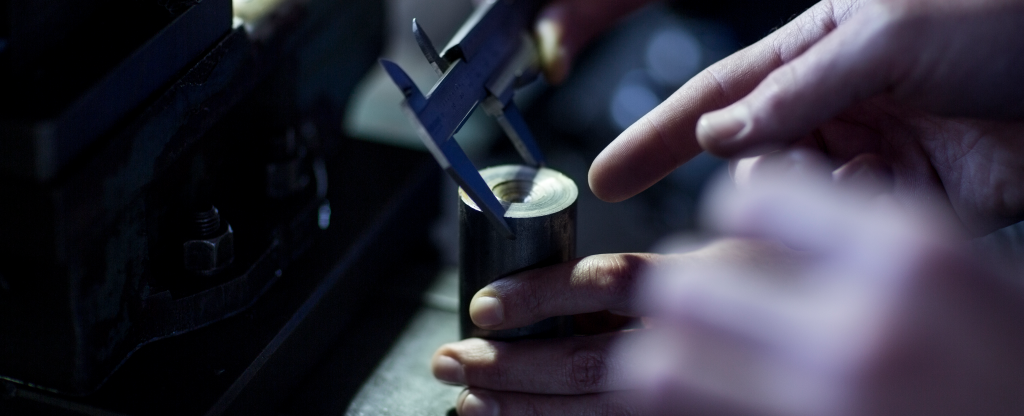
The majority of metal parts used in cars, electrical devices, and household appliances are derived from flat sheets of metal and then shaped into intricate designs through the use of progressive dies and metal stamping methods. One of the main features of progressive dies is that they are very efficient manufacturing tools that, along with the stamping process, produce intricate parts through several operations, though all are in one press cycle.
Many progressive die applications hinge on the use of draw dies as their main tool. These are the tools that can make a two-dimensional plane of metal go through a full transformation into three-dimensional objects like cups, cylinders, and a variety of other intricate shapes common in the industry. When compared to the basic cutting or bending methods, draw dies do indeed represent a more elaborate approach as they actually “pull” the material into deeper configurations, thereby allowing the production of parts that would otherwise be impossible to make.
In the case of production runs using the progressive draw dies for production stamping, the benefits received in terms of efficiency and cost savings are tremendous. With the multiple forming actions carried out continuously in one single operation, the handling time required is reduced to a minimum, the labor costs are kept low, and the delivery of a consistent quality throughout the whole quantity of parts is guaranteed.
In this article, we’ll delve into the mechanics behind draw dies within progressive die systems and examine their practical uses across different industries.
Understanding Progressive Dies
A progressive die is a complex tool used in the metal stamping process. It works like an assembly line, with each station performing a specific task as the material moves through the die. This allows for the transformation of simple flat strip stock into intricate finished parts through a series of carefully planned steps.
How Progressive Dies Work
The key to this process lies in how the strip stock is fed into the press. It moves in precise increments, ensuring that each operation is performed accurately. Here’s a breakdown of how it works:
- The strip stock is loaded into the press.
- As the press operates, the material moves forward by a set distance.
- At each station, different operations are carried out on the strip stock:
Piercing: Creating holes and cutouts in specific locations
Coining: Compressing material to create detailed features or flat surfaces
Blanking: Cutting the final part profile from the strip
Drawing: Stretching the material into three-dimensional shapes
- With each press stroke, another feature or detail is added to the part.
- The strip stock remains connected throughout most of the process, only separating from the finished part at the final station.
The Importance of Pilot Holes
To ensure that the operation is done precisely and accurately, pilot holes are being utilized as reference points. The holes that are very carefully located are the ones that take on the role of guides and enable the strip stock to be perfectly aligned at every station. In case these pilot holes do not exist, there would be the danger of operations getting misaligned, which would lead to the production of defective parts.
The pilots are cooperating with the corresponding pins that are in the die, and this holds the material in place before each forming operation takes place. The application of the pilot holes and pins helps to guarantee that the entire process is executed without a hitch.
By comprehending the operation of progressive dies and acknowledging their dependency on accurate measurements and alignments, the manufacturers will be able to simplify the production flow and gain higher metal stamping efficiency levels.
Understanding Draw Dies in Metal Stamping
Draw dies are specialized tools used in metal stamping to shape flat metal sheets into three-dimensional objects with significant depth. Unlike basic bending techniques, these dies stretch and redistribute the material to create various hollow forms such as cups, cylinders, and enclosures.
The Deep Draw Process
In the deep draw process, flat metal sheets are pushed through a die cavity using a punch. This method allows for greater control over the shaping of the material compared to simple bending. During this process, the metal experiences both stretching and compression forces simultaneously. While the bottom part of the material remains relatively stable, the sidewalls undergo significant elongation.
However, this technique comes with its challenges. If too much force is applied and the material’s limits are exceeded, it can result in tearing, wrinkling, or cracking at critical points where stress is concentrated.
The Role of Stretch Webs
In progressive draw die operations, stretch webs play a vital role. These specially designed connections ensure that the part being formed stays attached to the carrier strip throughout multiple stages of shaping. At the same time, they provide controlled flexibility to allow for the necessary movement of the material during drawing operations.
This flexibility is crucial as it prevents any damage to the carrier strip or misalignment of the part being formed. By maintaining precise positioning accuracy, manufacturers can achieve consistent and high-quality results in their metal stamping processes.
Managing Extreme Depth Requirements
When dealing with extreme depth requirements in metal stamping, manufacturers often employ a technique known as pre-draws. Instead of attempting to achieve the desired shape in one aggressive stroke, this approach involves gradually shaping the material across multiple stations.
By breaking down the forming process into smaller steps, manufacturers can better respect the properties of the material being used. This helps reduce stress concentrations that could lead to defects and ultimately results in superior part quality compared to single-stage aggressive forming methods.
Design Considerations for Draw Dies
Creating effective draw dies requires sophisticated design software to predict how metal will behave under extreme forming conditions. At Degele Manufacturing, we rely on SolidWorks paired with the Logopress add-on to simulate material flow and calculate deformation percentages before cutting a single piece of steel. This technology allows us to visualize potential problem areas where metal might thin excessively or crack during the drawing process.
The software helps us optimize critical design features that directly impact part quality:
Coining areas compress specific zones of the material to control thickness and create precise dimensional features
Flange formation establishes mounting surfaces or attachment points that meet exact customer specifications
Radii tightening at bottom shoulders prevents stress concentrations while maintaining material integrity throughout the draw
These design elements work together to guide material flow predictably through each forming stage. The radius at the punch nose, for instance, must be carefully calculated-too tight and you risk tearing the material, too loose and you won’t achieve the desired depth or shape definition. We also design relief areas that accommodate material displacement without creating wrinkles or buckles.
Each die component is engineered to support the metal as it transforms from flat stock into a three-dimensional part. The relationship between punch geometry, die cavity dimensions, and hold-down pressure determines whether your parts emerge with the tight tolerances and surface finish your application demands.
Applications of Draw Dies in Industry
Draw dies play a crucial role in various manufacturing industries, shaping flat metal into functional three-dimensional parts. Here’s how different sectors utilize draw dies:
1. Automotive Industry
The automotive industry heavily relies on draw dies for producing a wide range of components, including:
- Transmission housings
- Oil pans
- Structural brackets
- Sensor covers
2. Consumer Electronics
Consumer electronics manufacturers employ draw dies to create precise parts, such as:
- Battery cases
- Speaker grilles
- Protective enclosures
3. Appliance Sector
Metal stamping applications are vital in the appliance sector, where draw dies are used to manufacture:
- Washing machine drums
- Refrigerator panels
- HVAC system parts
4. Medical Device Production
Quality and consistency are critical in the medical field. Medical device producers rely on draw dies for crafting:
- Sterile instrument trays
- Surgical tool components
- Equipment housings
Adapting to Your Production Needs
Degele Manufacturing acknowledges that every stamping operation has its unique requirement that needs different methods. This is why we present our versatile solutions to fit every production volume:
Small-scale production: Our processing capacity for tiny parts is up to 2,500 pieces per year.
Large-scale production: Our facility can handle projects demanding millions of parts without difficulty.
We have presses with a capacity of 40 to 400 tons, which gives us the power to adjust the processes to your needs-be it experimenting with a new design or getting ready for mass production.
Getting Rid of Your Supply Chain Woes
When you work with Degele Manufacturing, you are in a position to buy both prototype runs and high-volume production from one place. This way, the need for managing different vendors is totally eliminated, and it is easier to handle your supply chain management.
We have the right setup in our factory to carry out complicated assemblies, with an annual quantity range of 500 to 100,000 units. No matter if you are producing complex auto parts or simple household goods, our progressive draw die technology can be scaled to meet your company’s demands.
Benefits of Using Progressive Draw Dies in Production Stamping
Progressive draw dies improve your manufacturing process by combining what usually needs several presses and setups into one automated operation. With each press cycle, your part moves through different stations, completing tasks like piercing, forming, and drawing without any manual work in between.
Increased Efficiency and Cost Savings
The improved production efficiency directly leads to significant cost savings for your operation:
- No more labor costs for moving parts between different machines
- Reduced work-in-progress inventory
- Less floor space needed for production
- Producing finished parts with every press stroke instead of managing multiple production queues
Consistent Quality Control
Quality consistency becomes your competitive advantage. Progressive dies maintain precise control over material flow at every station, ensuring each part meets exact dimensional specifications. The strip stock remains securely positioned through pilot holes, preventing the variations that often occur when parts are handled multiple times. You’ll see reduced scrap rates and fewer rejected parts since the material undergoes controlled deformation through carefully engineered forming stages.
Choose Degele Manufacturing Inc.
Metal stamping production relies heavily on progressive dies and draw die technology as indispensable tools. These cutting-edge machines perform a series of very accurate operations step by step on the metal sheets, turning them into beautiful, complex parts. They also make sure that the consistency and quality needed in your manufacturing process are maintained throughout the whole operation.
Being aware of the ways in which draw dies are integrated into progressive setups, like pre-draws, stretching of webs, and making of radii and flanges, you will be able to weigh your production requirements more wisely. Whether you need thousands of small components each year or complex assemblies, having the right metal stamping knowledge is crucial.
Ready to discuss your specific manufacturing challenges? Contact us at (586) 949-3550 to connect with our team. With over 50 years of experience and capabilities ranging from 40 to 400-ton presses, we’ll help you find the optimal solution for your project.