
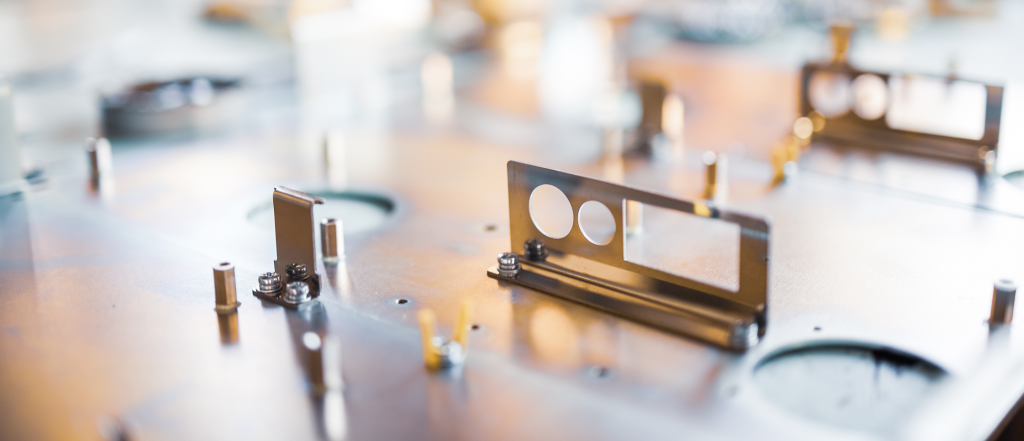
Metal stamping, otherwise known as metal forming, is frequently regarded as one of the mainstay manufacturing processes in the present-day industry. The cutting and making of metal sheets to the specified dimensions are the main features of this processing technique, which is done by means of specialized dies and high-pressure, heavy presses. The process gives the advantages of high accuracy, repeatability, and cost-effectiveness, making it a must-consider option in many applications.
When you think about the products you interact with daily, chances are many contain stamped metal components. Metal stamping is an important operation in the production of parts that make up these products and their reliability. The process can produce both simple brackets and complex assemblies, while at the same time, it can handle production runs from hundreds to millions of parts yearly.
Many industries rely heavily on metal stamping. Some examples include:
- Automotive manufacturers
- Aerospace companies
- Electronics producers
- Military contractors
- Agricultural equipment makers
- Consumer goods brands
- Industrial machinery manufacturers
Each industry leverages the unique advantages of metal stamping to meet its specific requirements for precision, durability, and efficiency.
Understanding the Metal Stamping Process
The metal stamping process takes flat metal sheets and changes them into particular shapes by applying dies and using stamping presses. Besides, this manufacturing method exerts immense force, which can be from 40 to 400 tons according to the application, cutting, bending, and forming metal into precise designs. The process not only gives a high degree of repeatability but also allows manufacturers to get an identical part consistently, whether you need 2,500 small components or millions of units per year.
The Role of Tooling in Metal Stamping
Tooling is the foundation of successful metal stamping operations. Custom-designed dies dictate the specifications of the stamped part precisely, ensuring that every component abides by the tightest tolerances healthily. Quality tooling has a strong influence on both the accuracy and the length of your production run; it is a major part of your investment strategy for attaining the consistency that is required by your projects.
Organizing Manufacturing Operations for Efficiency
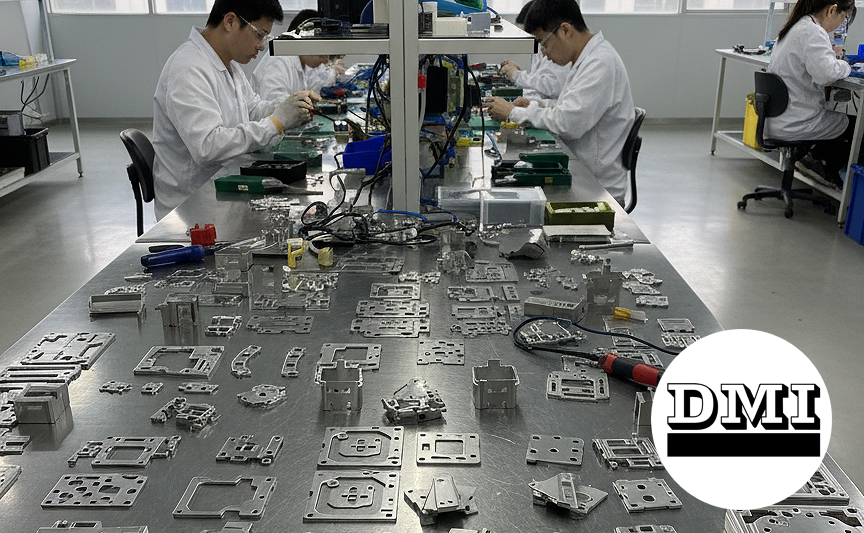
Manufacturing efficiency depends heavily on how production facilities organize their operations. Dedicated spaces for distinct functions create streamlined workflows:
Tooling areas for die design and maintenance
Machining zones for precision work
Inspection stations for quality control
Assembly sections for component integration
Maintenance facilities for equipment upkeep
This compartmentalized approach minimizes bottlenecks and reduces production time.
Versatility and Flexibility in Metal Stamping
The modern stamping press’s versatility makes it possible for the manufacturers to treat everything from fragile electronic elements to heavy-duty structural parts, and to adapt the press to the specific requirements of size and complexity. The metal stamping process is giving the same manufacturers the flexibility to choose their production goals, whether the company is prototyping with short-run production or scaling up to mass manufacturing.
Main Industries That Heavily Depend on Metal Stamping
Metal stamping is the most important and most reliable manufacturing method in many sectors, and each of them is counting on this process to provide them with parts that exactly fit their needs in terms of quality and specifications. Stamping is versatile; it can be used in applications where millions of small parts are produced yearly, as well as in the manufacturing of complex assemblies. Now let’s take a look at those industries that cannot do without metal stamping in their daily operations.
1. Automotive Industry
The automotive industry stands as one of the largest consumers of stamped metal components. Every vehicle you see on the road contains dozens, if not hundreds, of stamped parts that form its structural foundation and aesthetic appeal.
Body panels represent some of the most visible applications of automotive metal stamping. These include:
- Doors and fenders
- Hoods and trunk lids
- Quarter panels and rocker panels
- Roof structures
Beyond the exterior, chassis components rely heavily on precision stamping to ensure vehicle integrity. Stamped parts like:
- Frame rails and crossmembers
- Suspension brackets and mounting points
- Firewall structures
- Floor pan assemblies
The automotive sector requires extremely accurate work because safety relies on it. If metal parts for cars are not to the exact manufacturer’s specifications, they could possibly lead to a range of problems from poor appearance and finishing to major structural failures. Presses of 40 to 400 tons are used for stamping the different sizes and thicknesses of the various components of the vehicle, and this verifies that the parts are within the tolerances that are strictest for today’s assembly of vehicles.
Automotive sector’s durability requirements are also very strict. Parts must be able to live for years under the stress, shaking, changes in temperature, and exposure to weather while still keeping their strength and providing the protective qualities.
2. Aerospace Industry
The very first thing aircraft do when they are up in the air is to depend on thousands of aerospace stamped components that are precision-engineered and must perform perfectly even in extreme conditions. Metal stamping is a highly regarded technique for the production of parts in airplanes that are necessary for the support of modern aviation, ranging from commercial to military aircraft.
Exacting Specifications and Strict Tolerances
The aerospace industry is such that it requires the production of aircraft bodies and wing structures according to exact specifications. Every bracket, fitting, and structural component is subjected to very strict tolerances, which are often measured in thousandths of an inch, because even the slightest deviations can endanger flight safety and performance. Stamped metal parts can be found in every corner of an aircraft’s fuselage, holding the most important systems and making sure that structural strength is there even when the aircraft is flying.
Durability Under Extreme Conditions
Durability is the number one requirement in aerospace manufacturing that cannot be compromised. The components experience constant vibration, temperature variations from ground level to high altitude, and huge stress during takeoff and landing. Metal stamping processes lead to the production of parts that have uniform material properties and structural strength that can resist these harsh conditions for the entire operational life of the aircraft.
Precision Stamping for Complex Components
The precision capabilities of modern stamping operations, like those utilizing presses ranging from 40 to 400 tons, enable manufacturers to produce complex aerospace stamped components that meet the industry’s rigorous quality standards while maintaining cost-effectiveness for both prototype development and full-scale production runs.
3. Electronics Industry
The electronics sector has a very high standard in terms of accuracy, and this is why metal stamping is a very important manufacturing method that is used to produce a great number of electronic components. No matter if it is a smartphone, a computer, or any other electronic device, almost every one of them has some metal parts that are stamped and perform important roles.
Metal stamping is the ideal method for making the small and intricate parts that are necessary for electronic devices. For instance, your laptop or tablet holds many tiny connectors, contact springs, heat sinks, and shielding, these all come from flat metal sheets and go through stamping. The capacity of producing millions of identical parts with tolerances in the thousandths of an inch range makes stamping suitable for high-volume electronics manufacturing.
The precision of the component directly correlates to the functionality of the device. A connector that is even a fraction of a millimeter off will not provide the right contact, and the whole circuit will be of no use. Metal stamping is the process that allows manufacturers to deliver each part of the device with utmost precision, and this is the very reason electronics makers rely on this technique for:
Electrical contacts and terminals that must align perfectly for consistent connectivity
Battery contacts and springs requiring precise tension and dimensional accuracy
EMI/RFI shielding components that protect sensitive circuits from interference
Heat dissipation elements are designed with specific surface areas and mounting points
The electronics industry’s need for both miniaturization and mass production makes metal stamping the go-to solution for creating reliable, cost-effective components at scale.
4. Military and Defense Sector
In situations where lives are at stake, the performance of the equipment has to be up to the mark, and therefore, no compromises are allowed. The military defense industry requires that the stamped metal parts be of such quality that they can tolerate the very high desert fires and very low polar frost environments. The parts that are produced through the metal stamping process eventually get attached to everything that goes into making defense equipment, like armored vehicles and weaponry systems.
Significance of Stamped Components in Military Vehicles
For military vehicles, the requirements for body panels and structural components to be made are such that they should be very light and, at the same time, very strong. Metal stamping, in this case, helps manufacture these critical parts with the precision required not only to ensure mobility but also to retain protective capabilities. Such vehicles as tanks, personnel carriers, and support vehicles consist of stamped parts that have been designed according to very stringent military standards.
Dependability in Defense Applications
The factor of dependability is absolutely essential in this sector. There will be no inconsistencies in the manufacturing process and no component failures in mission-critical applications. The stamping of metal parts will ensure the repeatability and quality control that is necessary for defense applications. If parts are produced for equipment that is used by soldiers in the field, then the whole manufacturing process must be absolutely reliable.
This is one of the reasons why the defense industry usually cooperates with stamping manufacturers with long experience who are fully aware of the special requirements and strict quality rules imposed by military applications.
5. Agricultural Industry
The farming machinery is considered to be rough and resilient. The parts of the agricultural machines must be produced with such properties that they can stand daily exposure to dirt, moisture, extreme temperatures, and heavy loads. Metal stamping is involved, it is a vital process in the production of these robust components that ensure uninterrupted farm operation.
Importance of Stamped Metal Components in Agriculture
The agricultural machines, particularly the tractors and harvesting machines, could not do without stamped metal parts. The components are of such design as to get through the tough farm work that often involves repetitive movements and exposure to harsh environments.
Here are some examples of stamped metal parts used in agriculture:
- Mounting brackets for implements and attachments
- Housing components for engines and transmissions
- Structural supports for plows and tillers
- Protective guards and shields
- Blade assemblies and cutting tools
Strength and Consistency through Metal Stamping
The agricultural industry has specific requirements when it comes to its machinery parts. They need components that can handle continuous stress and perform reliably even in tough weather conditions. This is where metal stamping proves its worth.
With metal stamping, manufacturers are able to create parts that are as strong and consistent, practically speaking, as the application requires. The metal stamping gives the opportunity to produce thick-gauge components that have been reinforced with features capable of surviving the rigors of farm activities. Always, from a tiny sensor’s support bracket to a huge combine’s harvest piece, stamped parts assure the reliability that farmers depend on during the critical stages of planting and harvesting.
6. Consumer Goods Industry
Also, metal parts made via stamping are present in many products of everyday life, like kitchen devices and furniture in hardware stores. The consumer goods sector employs metal stamping to produce both functional and decorative components that increase the attractiveness of the product. In a nutshell, your smartphone’s elegant metal trim, your laptop’s hinges, and the brackets inside your home appliances are all examples of the precision and consistency stamping brings to consumer product components.
Versatility in Consumer Product Design
Metal stamping’s flexibility is evident in consumer product design, where manufacturers can create a wide range of items, including:
- Small decorative features
- Larger structural supports
This manufacturing process also allows the combination of different materials and different surface finishes, giving you the possibility to reach your preferred aesthetic goal while maintaining the durability standards of your customers. It does not matter whether you are producing power tools’ metal cases, home decor’s decorative panels, or furniture assembly’s functional brackets, stamping assuredly provides the capability to produce a consistent large quantity of products.
The method of manufacturing helps in controlling the costs of production while at the same time making sure that every piece is of the required specification, this is very important for winning price-sensitive markets that are mainly occupied by consumers.
7. Industrial Equipment Manufacturing
Industrial production facilities today utilize industrial machines that are durable enough to operate in severe conditions. Metal stamping is the process through which potent parts are manufactured that allow heavy-duty machines to run without any hassle.
The large variety of stamped metal parts used in hydraulic systems and conveyor mechanisms, among others, is the building of industrial tools and equipment. These parts need to be produced to very high standards—just a slight difference can lead to the stopping of an entire production line. Metal stamping, along with its precision, guarantees that the brackets, mounting plates, housings, and support structures are exactly the size needed to be inserted in complex machines with their assemblies.
Production of the following items heavily relies on by manufacturers of industrial equipment:
- Heavy-duty mounting brackets that hold critical parts securely
- Protective enclosures that keep mechanical systems delicate and safe from the outer environment
- Structural supports that can withstand very large loads are designed
- Custom parts that become a part of the proprietary machines without any disruption
Normally, replacement parts produced using stamping would have the same quality as those from the previous production run. This means the stamping process has less downtime and maintenance costs. When your industrial machinery demanded parts that could work perfectly under pressure, metal stamping was your answer, yielding the reliability and performance your operations required.